
Every garlic farmer knows the cycle. Harvest season arrives, the market floods, and prices collapse. Fresh garlic that cost $1.50–2.00/kg at planting time drops to $0.30–0.50/kg — sometimes even below the cost of harvesting. Tons of perfectly good garlic rot in storage or get plowed back into the field because it costs more to sell than to abandon.
But here is what most growers do not realize: that same garlic, processed into dehydrated garlic powder, sells for $3.10–3.40/kg — roughly 6–10 times the farm-gate price of fresh garlic during surplus season. A complete garlic processing line can transform 200 kg of fresh garlic into 50–60 kg of premium garlic powder every hour, turning a seasonal loss into a year-round profit center.
The opportunity is not limited to powder. Garlic flakes, granules, paste, and even garlic oil all command higher prices than fresh bulbs. The key is having the right processing equipment to convert raw surplus into shelf-stable, high-demand products that food manufacturers, spice companies, and restaurants buy consistently — regardless of garlic season.
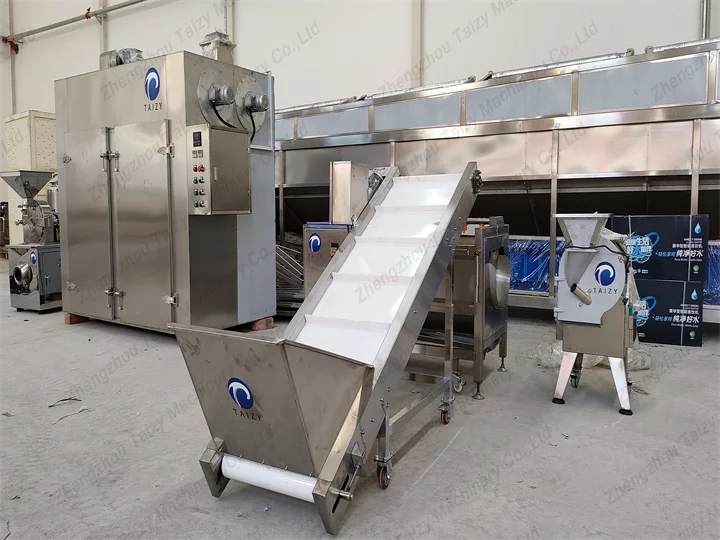
The Garlic Surplus Problem: Why Fresh Garlic Is a Perishable Liability
Garlic is a seasonal crop. In major producing regions — China (accounting for over 75% of global production), India, Spain, and Argentina — harvest concentrates into a 4–6 week window. During this window:
- Prices collapse: Farm-gate prices in China have historically dropped from $0.90/kg to $0.22/kg within a single month during peak harvest
- Storage is costly: Cold storage for garlic requires 0–1°C and 65–70% relative humidity, costing $0.05–0.10/kg/month — eating into already thin margins
- Losses mount: After 3–4 months in storage, sprouting, mold, and weight loss reduce sellable product by 10–20%
- Market timing pressure: Farmers must sell quickly or watch their crop deteriorate, giving buyers leverage to push prices even lower
The result: a farmer who planted garlic expecting $1.50/kg ends up selling at $0.40/kg — barely covering seed, fertilizer, and labor. The surplus is not a sign of poor farming; it is the natural economics of a seasonal crop hitting a concentrated market.
The solution is not to grow less garlic. The solution is to convert that surplus into a product that does not spoil, does not need cold storage, and sells at a premium year-round.
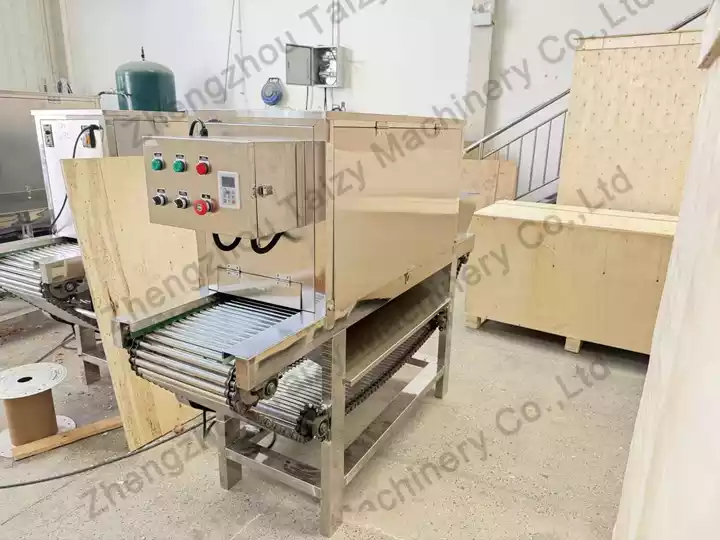
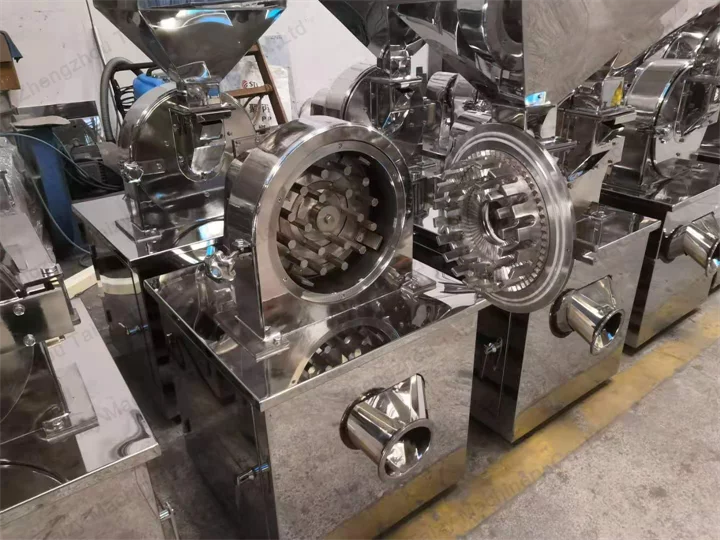
Value-Added Garlic Products: What Can You Make From Surplus?
A 大蒜加工生产线 can produce multiple value-added products from the same raw material. Here is how they compare:
| 产品 | Fresh Garlic Input | Output Ratio | Wholesale Price | Shelf Life | Market Demand |
|---|---|---|---|---|---|
| Fresh garlic | 1,000 kg | 1,000 kg | $0.40–1.00/kg | 3–4 months (cold storage) | Seasonal, price volatile |
| Garlic flakes (dehydrated) | 1,000 kg | 250–300 kg | $3.10–3.40/kg | 18 months | Steady, food manufacturing |
| Garlic powder (80–120 mesh) | 1,000 kg | 200–250 kg | $3.10–3.40/kg | 18–24 months | High, year-round |
| Garlic granules (40–80 mesh) | 1,000 kg | 230–280 kg | $2.80–3.20/kg | 18 months | Steady, food service |
| Garlic paste | 1,000 kg | 700–800 kg | $1.50–2.50/kg | 12 months (sealed) | Growing, retail & HORECA |
| Garlic oil (essential) | 1,000 kg | 2–4 kg | $50–120/kg | 24 months | Niche, pharmaceutical |
The economics are clear. Take 1,000 kg of surplus garlic bought at $0.40/kg ($400 total):
- Sell fresh: $400 revenue — barely break-even
- Convert to garlic powder: 220 kg × $3.25/kg = **$715 revenue** — minus processing costs, net profit of ~$200–280
- Convert to garlic flakes: 275 kg × $3.25/kg = **$894 revenue** — premium product for export market
The same 1,000 kg of garlic, processed instead of sold fresh, generates 70–120% more revenue. And that is before considering the elimination of cold storage costs.
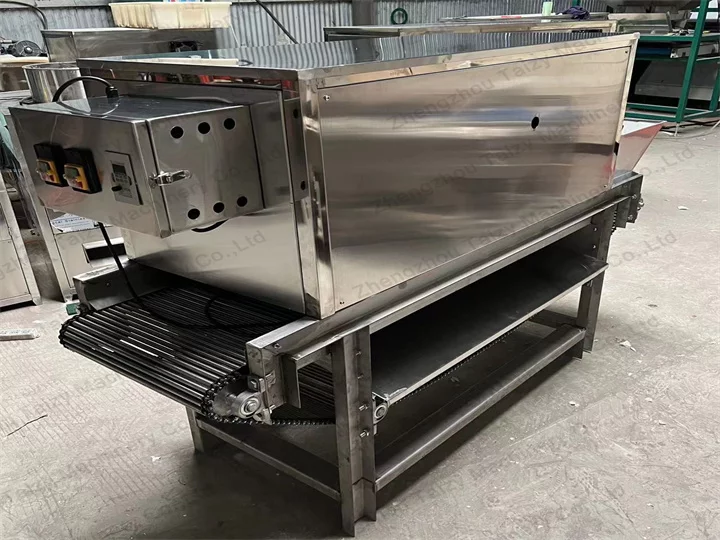
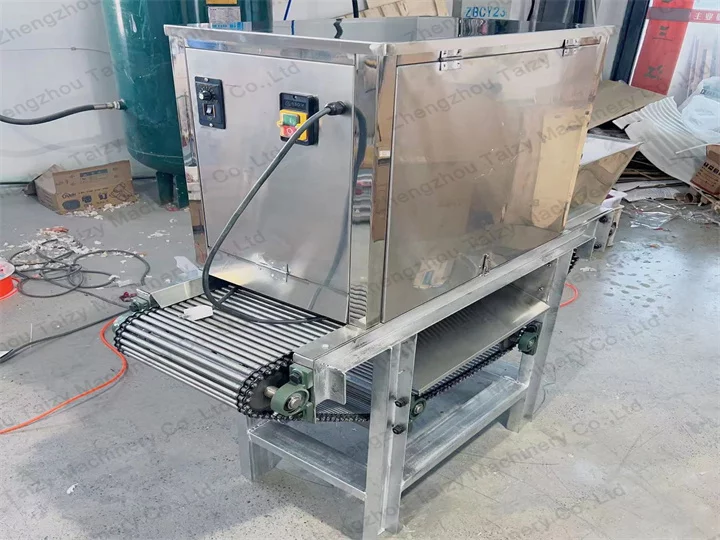
Garlic Processing Line Equipment List
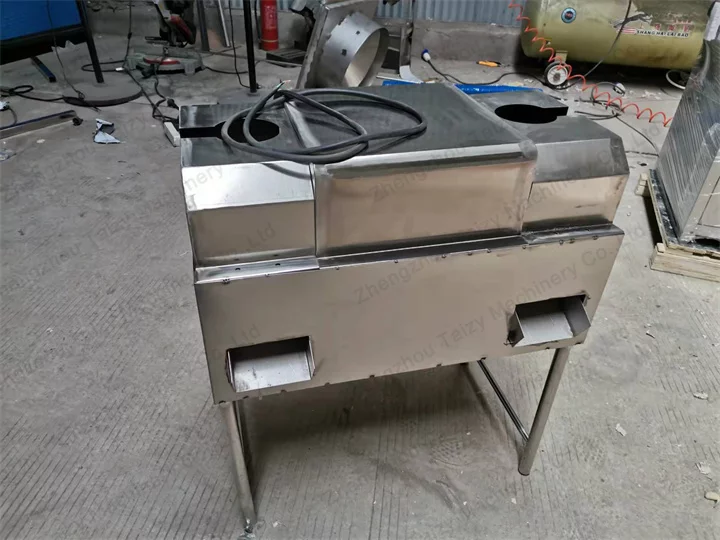
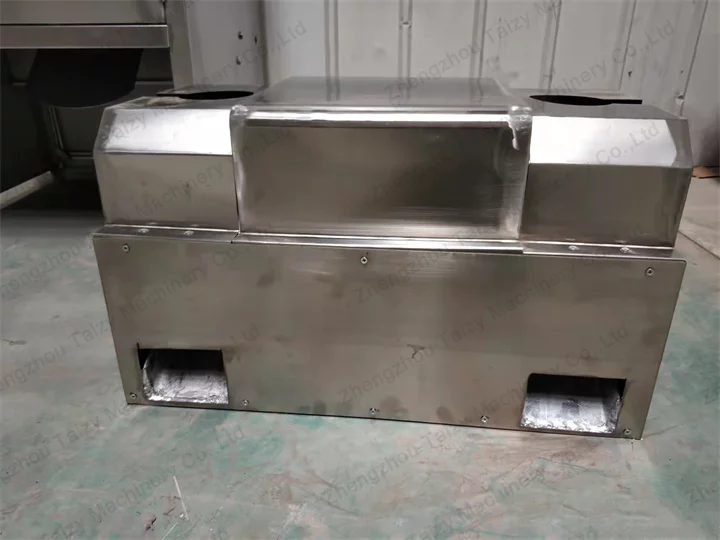
A complete 大蒜加工生产线 for powder production includes the following equipment:
| Equipment | 功能 | Key Specs |
|---|---|---|
| Z-Type Bucket Elevator | Lifts whole bulbs to separator | Food-grade SS304, PU buckets |
| Garlic Clove Separator | Breaks bulbs into individual cloves | Rubber roller, 200–1,000 kg/h, ≤1% damage |
| Bubble Washing Machine | Removes soil, roots, skin fragments | Air bubble + spray, SS304 tank |
| Inspection Conveyor | Manual sorting of damaged cloves | Food-grade belt, LED lighting |
| 蒜瓣脱皮机 | Removes dry outer skin from cloves | Air-blowing dry peel, 95–99% rate, ≤1% damage |
| 切蒜机 | Cuts cloves into uniform flakes | Rotary blade, 1.5–2.5mm thickness, adjustable |
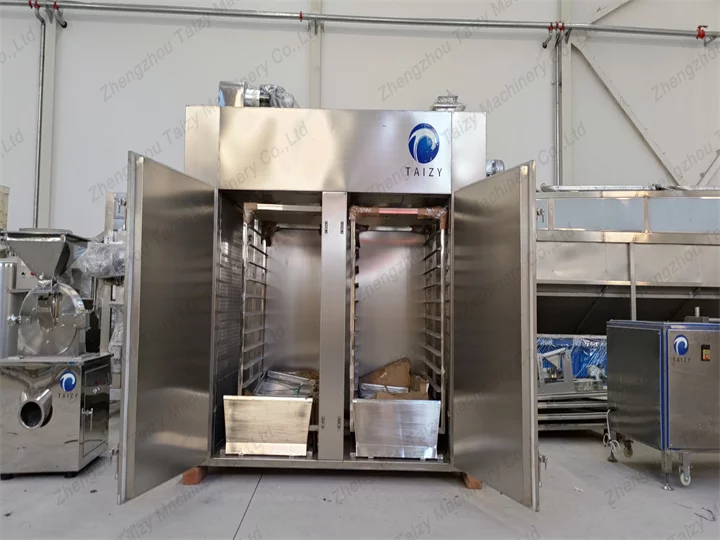
| Multi-Layer Hot Air Dehydrator | Dries flakes to 5–8% moisture | 55–70°C, 5–10 layers, 7–10 hours per batch |
| Hammer Mill / Pin Mill | Grinds dried flakes to 80–120 mesh powder | 20–120 kg/h output, cyclone separator, SS304 |
| Vibrating Screen | Ensures uniform particle size | 80–120 mesh, automatic oversize return |
| Multihead Weigher + VFFS Packager | Weighs and fills powder into moisture-barrier bags | ±0.5g accuracy, nitrogen flush, aluminum-PE film |
This 10-equipment line processes 200 kg of fresh garlic per hour into 50–60 kg of finished garlic powder — converting a seasonal surplus into a shelf-stable, export-ready product.
From Farm Gate to Export Market: The Profit Math
Let us calculate the economics of a mid-size garlic processing operation:
假设:
- Fresh garlic purchased at surplus season price: $0.40/kg
- Processing capacity: 200 kg fresh garlic/hour → 55 kg powder/hour
- Daily operation: 8 hours → 1,600 kg fresh → 440 kg powder
- Annual operation: 200 days (can run year-round with stored or purchased garlic)
Cost Breakdown (per kg powder):
| Cost Item | Calculation | Cost per kg powder |
|---|---|---|
| Raw garlic | 3.64 kg fresh × $0.40 | $1.46 |
| Electricity | Dryer + mill + line, ~25 kW × 8h / 440 kg | $0.20 |
| Labor | 4 operators × $15/day / 440 kg | $0.14 |
| 包装 | Aluminum-PE bags, nitrogen | $0.15 |
| Equipment depreciation | Line cost ÷ 5 years ÷ annual output | $0.12 |
| Other (water, maintenance, overhead) | — | $0.08 |
| Total cost per kg | $2.15 |
Revenue and Profit:
| Scenario | Selling Price | Daily Revenue | Annual Revenue (200 days) | Annual Profit |
|---|---|---|---|---|
| Domestic wholesale | $3.10/kg | $1,364 | $272,800 | $82,800 |
| Export wholesale | $3.40/kg | $1,496 | $299,200 | $109,200 |
| Retail-grade premium | $5.00/kg | $2,200 | $440,000 | $250,000 |
Even at the most conservative domestic wholesale price, the operation generates $82,800 annual profit from a 200 kg/hour line — and that is processing garlic that would otherwise have been sold at break-even or abandoned.
The strategic advantage: because garlic powder is shelf-stable for 18–24 months, you buy raw garlic at surplus prices ($0.30–0.40/kg) and sell the finished product year-round at stable prices ($3.10–3.40/kg). You are no longer at the mercy of seasonal price cycles.


Ready to Turn Your Garlic Surplus Into Profit?
If you are sitting on seasonal garlic surplus — or watching market prices collapse every harvest — a garlic processing line can convert that liability into a high-margin, shelf-stable product business. From garlic powder to flakes, granules, paste, and black garlic, the same core equipment produces multiple products that sell year-round at 6–10x the farm-gate price of fresh garlic.
Tell us about your operation and we will design the right line for you:
- What is your garlic surplus volume? (500 kg/day / 1–5 tons/day / 5–10+ tons/day)
- What products do you want to produce? (garlic powder / flakes / granules / paste / black garlic)
- Do you have existing cold storage, or do you need ambient-temperature processing?
- What is your target market? (domestic wholesale / export / retail brand)
- Do you need a complete line from clove separation to packaging, or specific stages only?
- What is your available workshop space? (50 m² / 100 m² / 200+ m²)
Contact us today for a free consultation and quotation. Our team will assess your garlic variety, processing volume, target products, and facility to recommend the optimal garlic processing line configuration — typically within 24 hours.