
When a food factory plans to upgrade from batch frying to continuous production, one of the first questions is: How many kilograms per hour can a continuous fryer process? The answer depends on the fryer model, heating method, product type, and required frying time. For commercial food processors, choosing the right capacity helps prevent both production bottlenecks and unnecessary equipment investment.
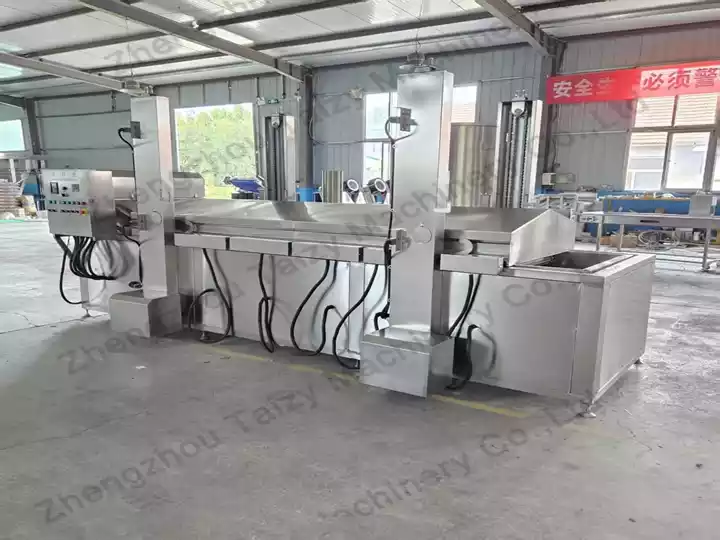
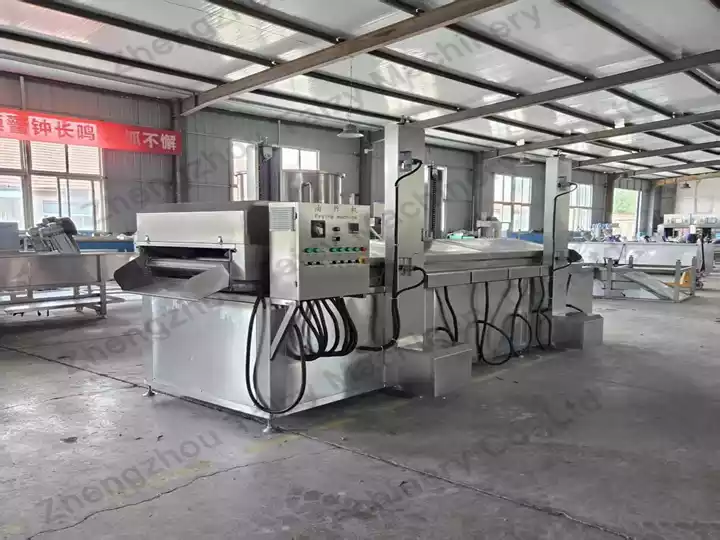
Continuous Fryer Capacity Can Reach 1,500 kg/h
Continuous fryers are designed for large-volume food production, with different models available for different output requirements. Our electric-heated models range from 300 kg/h to 1,500 kg/h, while gas-heated models cover approximately 500–800 kg/h.
This means a small or medium-sized food processor does not necessarily need a high-capacity industrial fryer. At the same time, factories with large daily orders can choose a higher-output model to keep frying continuous throughout the workday.
How Much Capacity Does Your Factory Need?
The easiest way to estimate your required capacity is to divide your expected daily production by your planned working hours.
For example, if a factory needs to fry 4,000 kg of food during an 8-hour shift, the basic requirement is around 500 кг/ч. In practice, adding some capacity provides room for fluctuations in feeding speed, product characteristics, and production demand.
The goal is not simply to choose the fastest fryer, but to select a capacity that matches your actual production volume.
Different Models for Different Production Scales
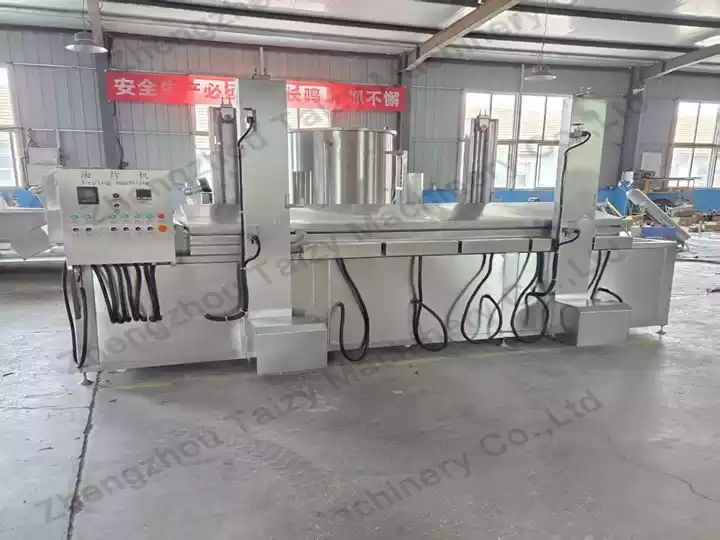
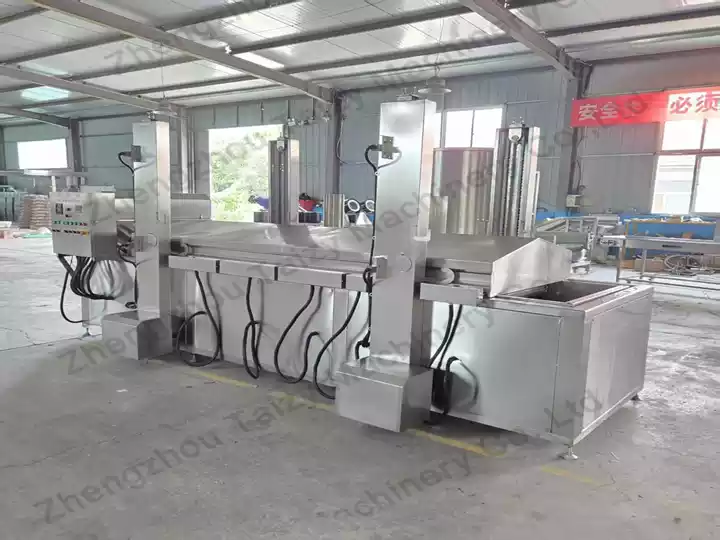
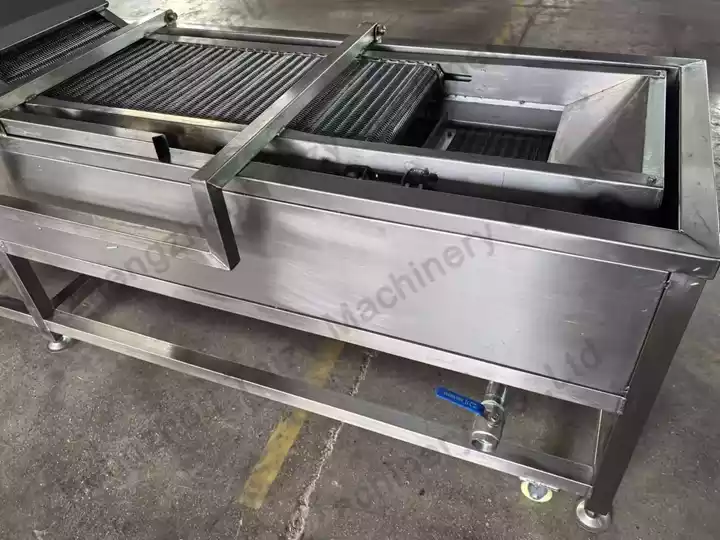
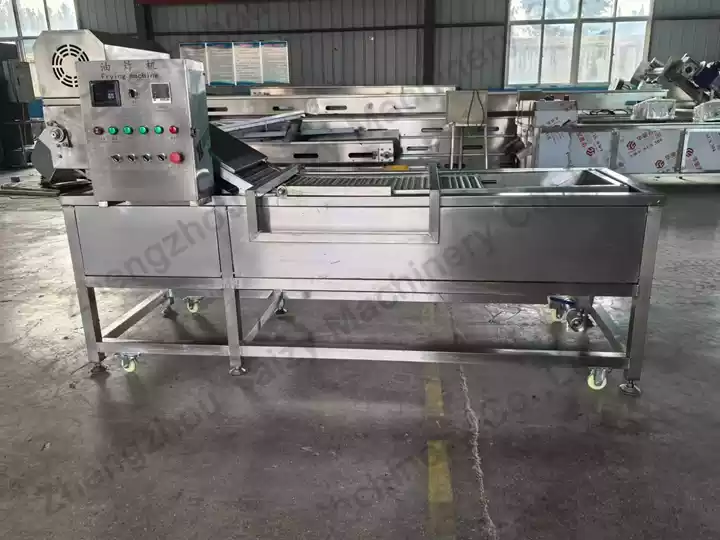
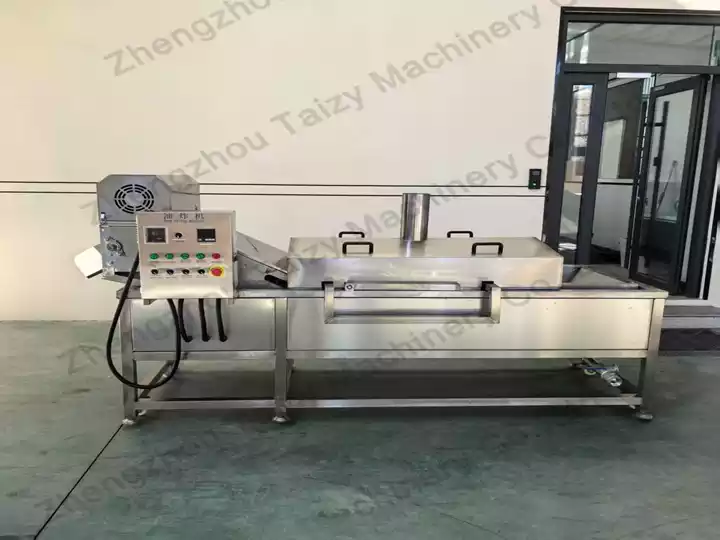
For example, the TZ-2000 electric continuous fryer has a capacity of around 300 kg/h, making it suitable for lower-volume commercial production. Larger models can gradually increase output to 500, 600, 800, and 1,000 kg/h, while the TZ-8000 can reach approximately 1,500 kg/h.
For factories that prefer gas heating, models are available at approximately 500, 600, and 800 kg/h. This gives manufacturers more flexibility to select equipment according to their factory’s energy conditions and production target.
Why Product Type Also Matters
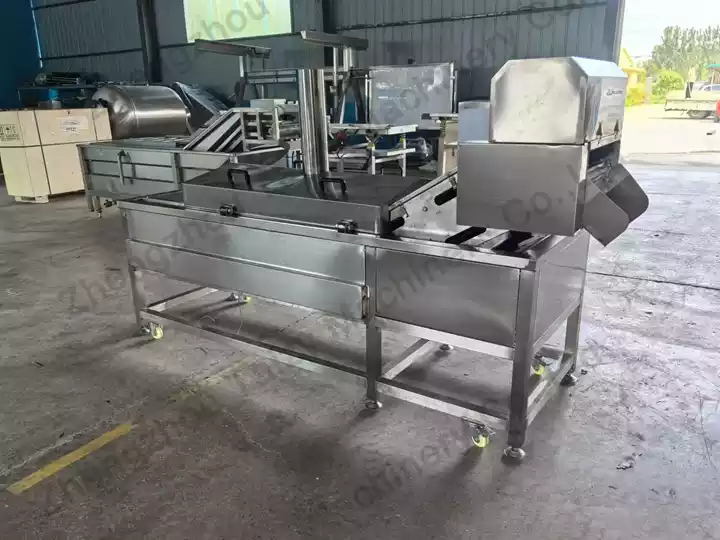
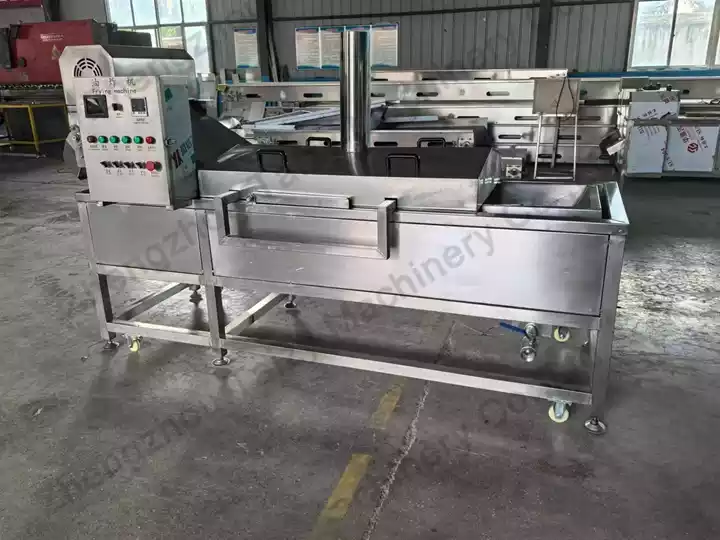
Rated capacity should not be viewed as a fixed number for every food product. The size, moisture content, shape, feeding density, frying temperature, and required frying time can all influence actual throughput.
For example, a product that requires a longer frying time may need to remain in the fryer longer, while a smaller or thinner product may move through the frying system more quickly. Therefore, manufacturers should provide product details when confirming the required continuous fryer capacity.
Match the Fryer with Your Production Line
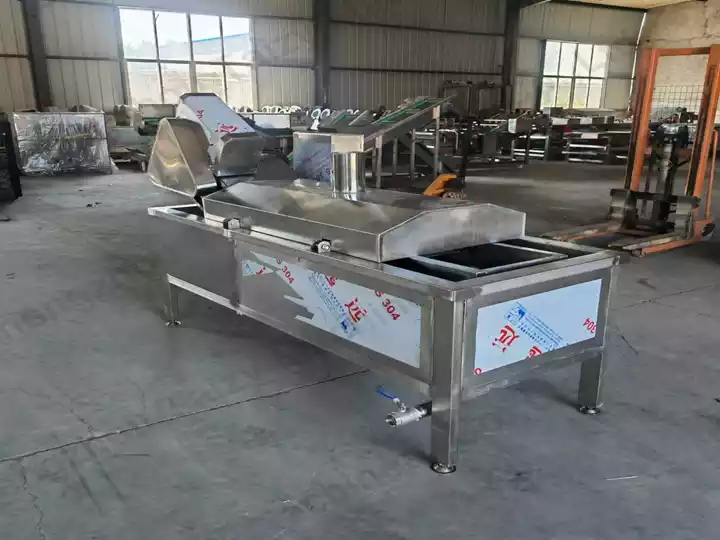
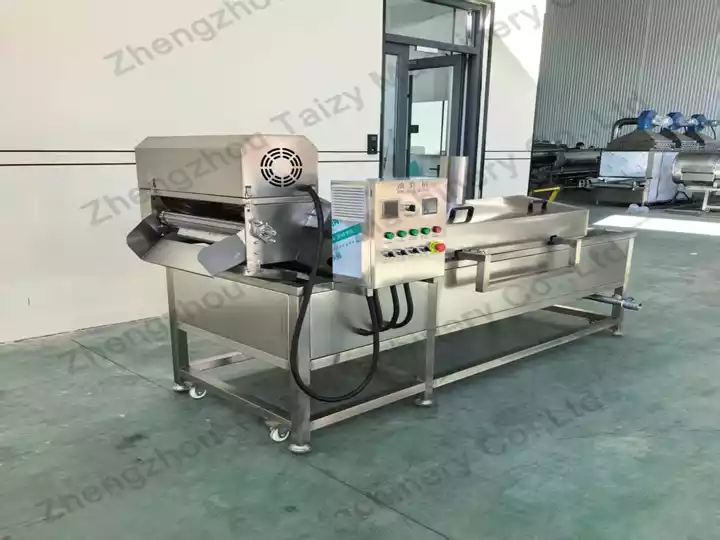
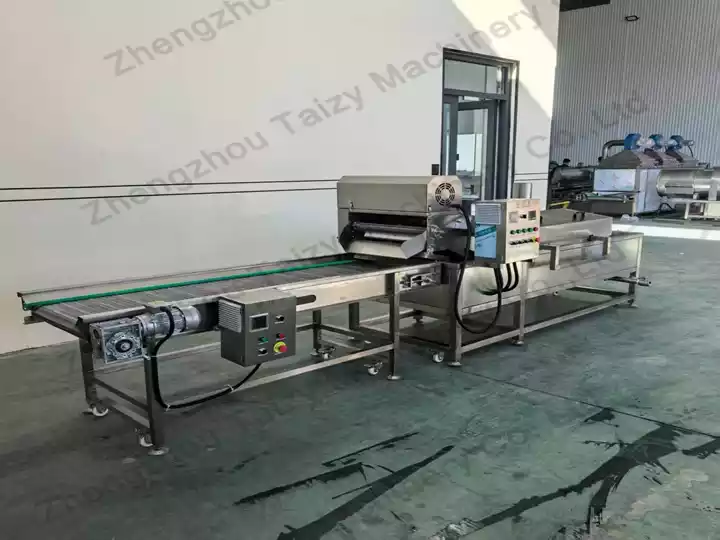
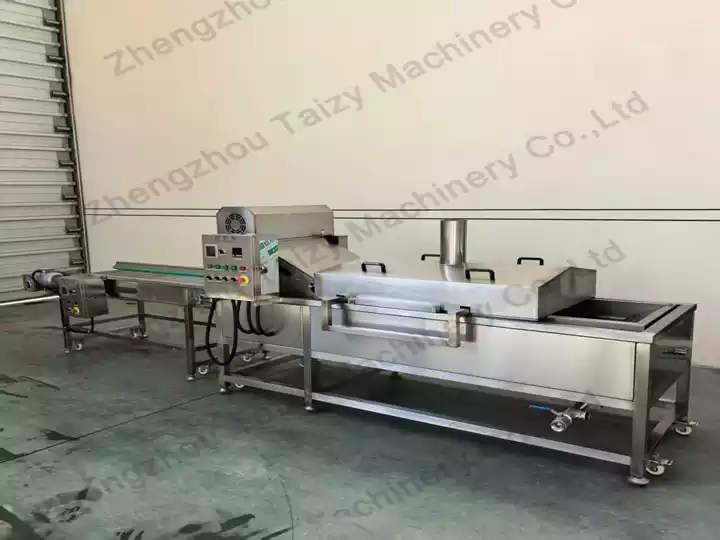
A high-capacity fryer can only achieve its full potential when the surrounding production line can keep up. Feeding, washing, cutting, blanching, seasoning, de-oiling, and packaging equipment should have compatible processing capacities.
A balanced production line reduces waiting time and prevents the fryer from becoming either a bottleneck or an oversized part of the system.
Choose Capacity Based on Your Real Production Needs
From 300 kg/h to 1,500 kg/h, continuous frying equipment can cover a wide range of commercial production requirements. Instead of choosing a machine based only on its maximum output, consider your daily production, working hours, product characteristics, heating method, and future expansion plans.
If you are unsure which continuous fryer capacity is suitable, send us your product type, required daily output, and working hours. We can recommend a suitable model and provide the corresponding specifications and a working video.